How to Organize a 5K Race: What Building One From Scratch Taught Me
How we sold out Oakville's first Bronte Harbour Classic — 875 runners on Father's Day. A first-person playbook on how to organize a 5K race with a small team and AI leverage.
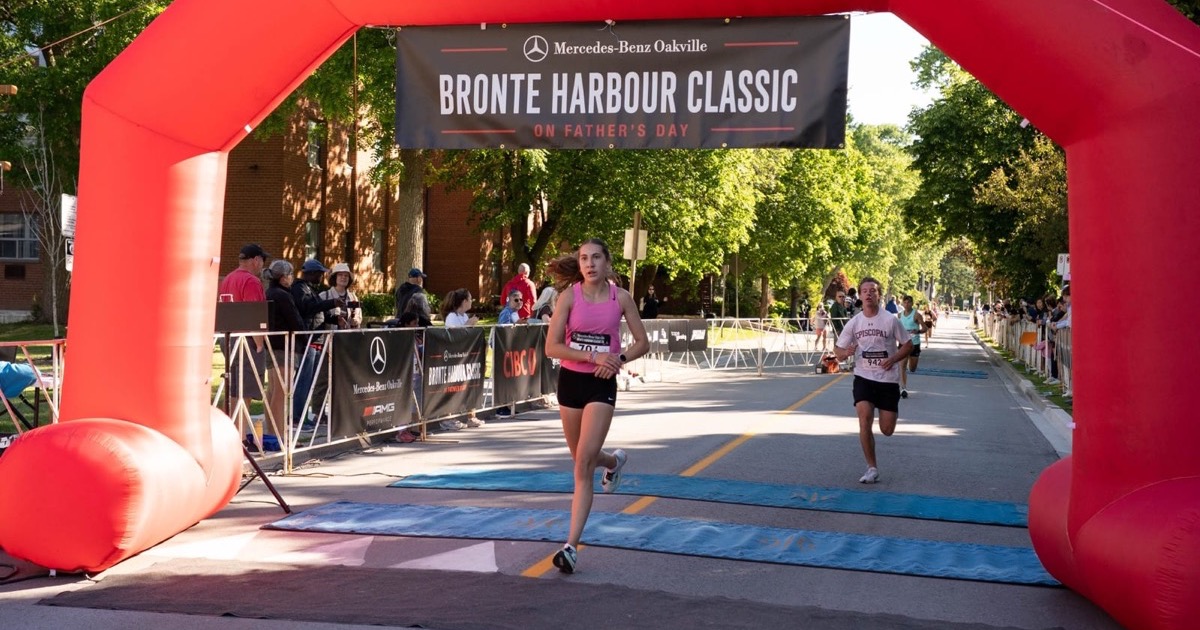
If you want to know how to organize a 5K race, I can tell you what it actually took, because we just did it. On Sunday, June 21 — Father’s Day — more than 900 people lined up at Bronte Heritage Waterfront Park in Oakville for the first-ever Bronte Harbour Classic. The 5K sold out at 800-plus. The kids’ 1K sold out at 130-plus. Three runners broke 15 minutes; Adam Schmidt took it in 14:43, and Sadie-Jane Hickson was first woman across in 16:34. A week later, the thing I keep coming back to is that almost nobody in the crowd could tell it was our first time.
That was the whole goal. And getting there taught me more about building hard things with a small team than any project I’ve shipped in years.
Quick Answer: To organize a 5K race, secure a date and course, pull permits and event insurance early, line up sponsors and volunteers, set up online registration and timing, and build a medical and weather plan. Most guides say 4–6 months minimum. Our inaugural Bronte Harbour Classic took roughly three years to do right — and sold out at 875 runners because we ran the operations like a product, not a party.
The honest answer to “how long does it take” is two answers
Every checklist online will tell you 4 to 6 months. That’s the floor, and it’s true for the mechanics — permits, registration, swag orders, volunteer recruitment. But it’s not the real answer.
We talked about this race for three years before a single runner registered. Not because the paperwork takes three years. Because getting the right version off the ground meant waiting until the team, the route, the sponsors, and the Town of Oakville were all lined up at the same time. My co-director, Charles J. Sathmary, has spent his life around competitive running. I came at it from the operations and systems side. Between us and the Bronte Runners Club, we had the two halves a race actually needs: people who understand the sport, and people who understand logistics.
So when someone asks how long it takes, I give both numbers. The execution is months. The judgment about when to launch can be years. Most advice only covers the first one, and that’s why a lot of first-year races feel rushed and never come back.
A race is a hundred small decisions, made in advance
Here’s the part nobody sees: a race is a hundred small decisions that each look minor and collectively decide whether the morning works.
Where does the start corral funnel? How do 130 kids run a 1K without a single parent losing track of their child? What happens if someone goes down at kilometer three? You don’t improvise those answers on race morning. You build them in advance and you pressure-test the assumptions. We had St. John Ambulance on the course for medical, a weather contingency for a hot June Sunday, and a start sequence timed so the kids’ run and the 5K never collided.
The Road Runners Club of America publishes safe-event guidelines that every first-time director should read before anything else, because the single expense you never cut is event insurance and medical coverage. Everything else on the budget is negotiable. Those two aren’t.
You need permits, and you need to start them embarrassingly early
Yes, you need permits for a road race — that question comes up constantly, and the answer is almost always yes if you touch a public road or a public park. In our case that meant working with the Town of Oakville on the route, the road and trail access, and the use of Bronte Heritage Waterfront Park.
The mistake first-timers make is treating permits as a form you file. They’re a dependency. Your registration date, your marketing, your sponsor commitments — all of it sits on top of municipal approval. If A (the permit) slips, B, C, and D (registration open, sponsor decks, ad spend) all slip with it. I mapped those dependencies the way I’d map a product launch, so nothing downstream started until the thing it depended on was locked. Police coordination, EMS, and course signage follow the same logic. Start them embarrassingly early and you buy yourself room when something inevitably moves.
I ran the whole thing like a product launch
I run e-commerce brands and build software, so I did the thing I always do — I treated the race like a product with a hard launch date and no option to slip it.
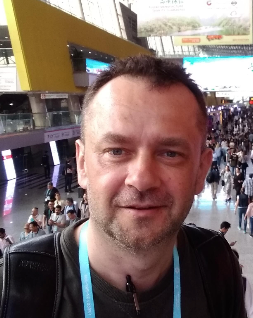
That meant the registration site, the email sequences, the sponsor decks, the volunteer scheduling, and the day-of communications all got built and rebuilt the way you iterate a product. I built and ran bronteharbourclassic.com myself, with the same AI-assisted workflow I use for client work — not because I’m a developer (I’m a 55-year-old mechanical engineer), but because when you’re a volunteer team without a big budget, that kind of leverage isn’t a nice-to-have. It’s the only way the math works.
The payoff showed up in the boring metrics. Registration didn’t jam. The start went off on time. Results posted fast. Every finisher went home with a custom antique-silver medal stamped with the Bronte lighthouse. None of that is glamorous, and all of it is exactly what people quietly mean when they say an event “felt professional.”
Sponsors and partners are how a first-year race looks like a tenth-year race
The part I underestimated: how much of this is relationships, not operations.
The first Bronte Harbour Classic happened because a long list of people said yes. Mercedes-Benz Oakville came on as title sponsor. CIBC backed us as founding sponsor. ON Running put up eight pairs of performance shoes plus a $1,600 cash purse for our top finishers. Be Active Physio, the Town of Oakville, and a dozen more partners — TapeGeeks, GearTOP Design, Pace Performance, Oakville Performance Running, the Bronte Runners Club — each filled in a piece. St. John Ambulance kept the course safe.
A practical note on sponsorship, because every guide tells you to build tiers and stops there: lead with what the sponsor actually gets, not what you need. Logo placement on bibs and banners, booth space, emcee mentions, social reach — package the value, then price the tiers. We also pointed the whole event at something bigger than a race. Proceeds support the Oakville Dads Community Fund, and doing it on Father’s Day wasn’t an accident.
Registration, timing, and the tech stack we actually used
The tech decisions are where a small team either buys back time or drowns in it, so I’ll be specific about how ours ran.
For registration, we went with an established online platform rather than rolling our own. First-year directors are tempted to hand-build a signup page to dodge a fee, and for a tiny fun run that’s fine. For a race we expected to fill, the platform earned its keep — it handled payments, waivers, tiered pricing, and the clean participant data that timing and communications both depend on. The rule I gave myself: don’t rebuild anything a proven tool already does well, and spend your own hours only where you have an edge.
For timing, we used chip timing rather than a stopwatch and a clipboard. The line most guides draw is a few hundred runners — below that you can usually get by with a timing app or manual scoring; above it, you want chips. We were well past that line at 800-plus in the 5K, and three runners breaking 15 minutes is exactly the scenario where accurate, fast results stop being a luxury. People care about their time, and they care about seeing it quickly. Posting results fast is part of the experience, not an afterthought.
The website was the piece I owned outright. I built and ran bronteharbourclassic.com myself with AI-assisted tooling — the same workflow I use on client projects. I’m not a developer; I’m a 55-year-old mechanical engineer who learned to ship with AI in the loop. That one decision is most of how a volunteer team produced something that read as established. The site, the email sequences, the sponsor decks, and the day-of communications all got built and revised the way you iterate a product — on our schedule, without an agency invoice. When you don’t have budget, that kind of automation is the budget.
The honest takeaway: buy the boring infrastructure (registration, timing, insurance), and put your scarce hours into the things only you can do — the site, the story, the relationships. Get that split wrong and a small team burns out doing work a tool should have absorbed.
How our race morning actually ran
People picture race day as the start gun. The start gun is the easy part. The two hours before it are where a race is won or lost, so here’s roughly how ours unfolded.
The setup crew and volunteers arrive in the dark, well before the first runner. Tents go up. The finish arch and start banner get staged. Signage for parking, check-in, restrooms, and the route goes out, and the sound system gets tested while there’s still time to fix it. This is also when the road closures and course marshaling lock in — a road race lives or dies on whether the route is genuinely closed and clearly marked, so marshals get to their posts early and someone walks the course one last time.
Volunteer check-in and same-day registration open next. Every volunteer gets a clear role and a clear post, because nothing slows a morning like a dozen willing people with no assignment. That’s why a dedicated volunteer manager running the check-in table is worth their weight in gold. Around the same window, St. John Ambulance is in position for medical, the announcer starts working the crowd, and the warm-up gets people moving.
Then the start sequence, which we staged on purpose. The kids’ 1K went off first at 8:00, the 5K at 8:30. Separating them mattered — 130 kids and 800 adults sharing one start corral is chaos, and the gap let families finish the 1K, catch their breath, and watch the main event. Sequencing isn’t a detail; it’s a safety and experience decision you make weeks earlier and then execute to the minute.
After the gun, the work shifts to the finish. The chute has to flow without bottlenecking, finishers collect the custom antique-silver lighthouse medal, water and food stay stocked, and results start posting. Then the awards — the $1,600 cash purse and the eight pairs of ON Running shoes for our top finishers — and the festival atmosphere that turns a race into a morning people actually remember. Last comes the part everyone forgets to plan: cleanup, and handing the park back better than we found it. If you only schedule up to the start and wing the rest, the back half of your morning is where the cracks show.
A race is a coalition, not a company
This is the one nobody warns you about, and it’s the lesson I’ll carry into everything else I build.
When you produce an event like this, you’re not running a company where you control the inputs. You’re assembling a coalition — sponsors, volunteers, a municipality, a running club, a charity, hundreds of runners — who each have their own reasons to show up. Your job is to make all of those reasons line up on one Sunday morning. That’s a fundamentally different muscle than building a business, where you can mostly just decide and execute.
Most race-planning content skips this entirely because it’s selling you software or timing services, so it frames a race as a checklist you complete alone. It isn’t. The checklist is real and you need it. But the actual skill is getting a dozen independent parties to commit to the same date and then delivering hard enough that they all want to come back. That’s the muscle I trained this year, and it’s the one I’ll keep training.
What I’d tell anyone building something from nothing
A few principles held up under real race-day pressure, and I’d reuse every one of them:
- Start before you’re ready, but launch only when the system is. We sat on the idea for years, then moved fast once the pieces existed. Both halves mattered. Patience isn’t the opposite of speed — it’s what makes speed safe.
- Operations are a feature. The medal, the photos, the clean on-time start — runners feel those as quality, even if they never think about the work behind them.
- Borrow leverage wherever you can. A small volunteer team produced an event that looked like a much bigger one. Most of that gap got closed with good systems and good partners, not money.
- Map the dependencies, not just the tasks. A checklist tells you what to do. A dependency map tells you what blocks what — and that’s where first-year races usually break.
We’re already planning 2027, possibly with a 10K added. If you want to see how the first one came together, the full recap and photo gallery are in the Bronte Harbour Classic 2026 recap.
Frequently Asked Questions
How much does it cost to put on a 5K?
It depends mostly on size and venue. For a basic 100–200 person 5K, the per-participant items run roughly $7 for shirts, $6 for medals, and $3 for registration and payment processing, plus fixed costs like event insurance (from about $150) and chip timing (around $700). Road closures, traffic management, and permits push it higher. In our case, sponsorship covered the gap so registration fees didn’t have to carry everything.
How long does it take to plan a 5K race?
Plan on 4 to 6 months as an absolute minimum to handle permits, registration, sponsors, volunteers, and marketing. That’s the mechanical floor. The bigger question is timing the launch itself — when your team, course, sponsors, and municipal approval all align. For us that judgment took roughly three years, and waiting was the right call. The execution is months; knowing when to start can take longer.
Do you need permits for a road race?
Almost always, yes. If your course uses any public road or public park, you’ll need municipal approval, and usually police and EMS coordination plus proof of event insurance. Treat permits as a dependency, not a form — your registration date, marketing, and sponsor commitments all sit on top of that approval. Start the permit process embarrassingly early, because everything downstream waits on it.
Do I need to certify my 5K course or get a race director certification?
No on both counts, for a community race. You don’t need a certified course or a race director certification to run a legitimate, safe, fun 5K. Course certification (through a body like USATF) matters only if you’re promoting official competitive times. A certification course can help you network and prepare for bigger events, but it’s optional. Getting the distance right still matters — certification of it doesn’t.
How many volunteers do I need to run a 5K?
It scales with size, but the structure matters more than the headcount. Assign clear leads — a volunteer manager, a timing and registration lead, a sponsorship coordinator, a course and signage lead — and let each own their block of race day so you’re not running everything solo. Recruit from running clubs, schools, sports teams, and local businesses, and recruit earlier than feels necessary. A clear org chart beats a big crowd of unassigned helpers.
What’s the most common mistake first-time race organizers make?
Treating the race as a checklist they complete alone. The checklist is real, but a race is a coalition — sponsors, volunteers, a municipality, a charity, hundreds of runners — each with their own reasons to show up. The skill is aligning all of them on one date and delivering well enough that they return. The second mistake is rushing the launch to hit a calendar slot before the pieces are actually ready.
What time should setup start on race day?
Long before the start gun. In our case, the setup crew and volunteers arrived in the dark to raise tents, stage the finish arch, put out signage, test the sound system, and lock in road closures and course marshals. Volunteer check-in and same-day registration opened next, with medical in position. Build a minute-by-minute morning timeline and assign a lead to each block — the two hours before the start are where the race is actually won.
Can a small team really run a 900-person race?
Yes — we did it as a volunteer team. The trick is leverage. We built the registration site, email sequences, and day-of communications with AI-assisted systems instead of a big agency budget, and we leaned on sponsors and partners to fill the gaps. A small team can produce an event that looks much larger when the systems are good and the partnerships are real. The constraint is rarely headcount; it’s usually systems.
If you’re building something that feels too big for the team you have — a race, a product, a brand — that’s usually a systems problem, not a headcount problem. It’s most of what I help people with. If that’s where you are, get in touch.
Directing a race or running a community event? I help race directors build this same system.